Understanding the work · Emotions & Metaphysical Kinesiology

Your body knows.
Let's ask it.

Kinesiology uses the body to answer questions that words often cannot reach. If something in you has been circling, pulling, refusing to be ignored — this is the work that finally listens.

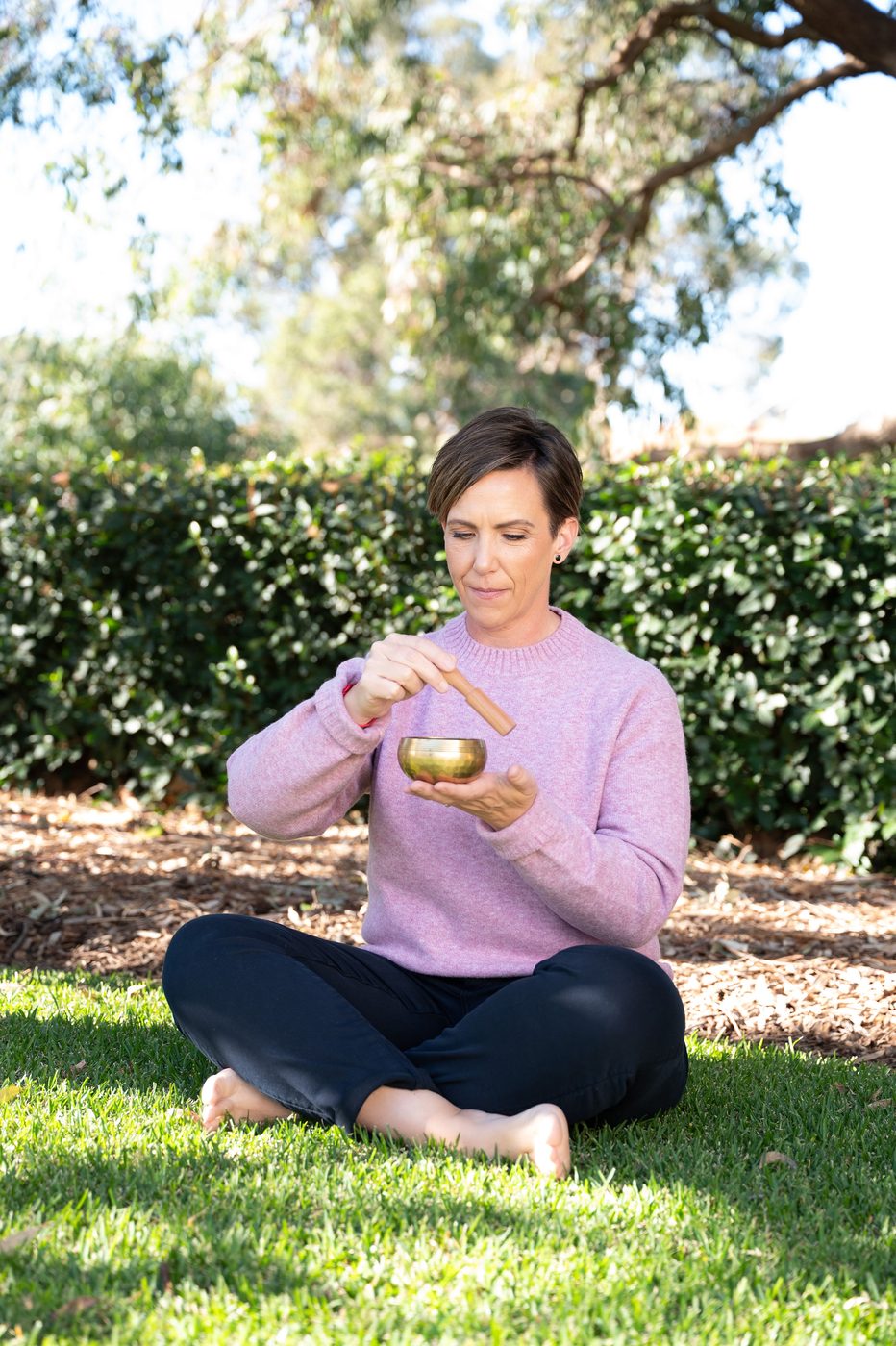
Anita Gibbons sitting cross-legged outdoors, playing a singing bowl
In plain language

Think of it as
Google for
the body

Most of us have spent years trying to think our way through things that live far beneath thinking. We understand our patterns intellectually. We know, on some level, why we keep arriving in the same place. And yet knowing does not always shift things.

Emotions & Metaphysical Kinesiology — EMK — bypasses the thinking mind entirely and goes straight to the source. Using muscle testing as a biofeedback tool, it asks the body directly what it needs, what it is holding, and where the stress actually lives. The body does not edit itself the way the mind does. It simply responds.

How Anita describes it

"Muscle testing is a way of asking the body directly — and letting it answer in its own language, beneath the noise of the thinking mind."

What that means in practice

"I use the body to answer questions that you may not be able to put into words. It will tell me what your words aren't."

The roots of the work

Where kinesiology
comes from

The word kinesiology simply means the study of movement — and if you have only ever heard it in a university or sports-science context, that is the other branch of the same word. The kinesiology Anita practises is something different: a complementary modality that grew out of discoveries made in the 1960s, when an American chiropractor, Dr George Goodheart, found that the body's muscles could be used to gather information about what was happening within a person — not just physically, but emotionally and energetically.

From that beginning, kinesiology grew into a family of gentle, non-invasive practices used around the world. What they share is the same foundation: muscle monitoring used as a biofeedback tool, and the understanding that the body holds its own record of what we carry — and its own wisdom about what it needs.

Kinesiology sits within complementary and energy-based approaches to wellbeing. It does not diagnose or treat medical conditions, and it works alongside — never instead of — the care of your GP or mental-health professional.
The mechanics, gently

What muscle testing actually is

Before anything else, it helps to know what a muscle test looks like in its simplest, in-person form — because everything else rests on it.

A muscle test involves applying light, gentle pressure to a muscle — often the arm — and noticing how it responds. It is not a test of strength. It is a way of reading the body's stress response: when a statement, question or subject carries stress for the body, the muscle's response changes. That change is the feedback. Held question by held question, the body indicates where stress is sitting, what is out of balance, and what it needs to come back to centre.

The mind can talk around things all day, but the body answers plainly. Kinesiologists call this muscle monitoring — using the body as its own biofeedback system.

Later on this page, you will see how this works when Anita and her clients are not in the same room. But it all begins here.
The modality behind the work

What makes EMK
different

Emotions & Metaphysical Kinesiology™ is a specific modality within the wider kinesiology family — founded in 2018 by Denise Robinson of By The Bay Kinesiology in Melbourne. It is a heart-centred, remedy-based approach: rather than focusing on the physical or structural, EMK works with the emotional and metaphysical layers of what the body is holding, and uses natural remedies — essential oils, flower essences, crystals, affirmations — as part of restoring balance.

Anita completed her EMK Practitioner training through By The Bay Kinesiology and is a certified EMK Practitioner. She is a member of the International Institute for Complementary Therapists (IICT), which recognises EMK as an accredited modality under Specialised Kinesiology.

If you would like to know more about Anita's path to this work, her story is here.

Certified EMK Practitioner Trained by Denise Robinson IICT Member

"The answers are already inside you. They have always been there. The body has simply been waiting for someone to finally ask the right questions."

Anita Gibbons · Barefoot Kinesiologist · on the unbecoming

What brings women here

The things women
arrive carrying

There is no "right" reason to come to kinesiology, and you do not need a named problem to begin. But if you are wondering whether this work is for you, these are the themes women most often bring to a session:

Stress and overwhelm that has become the background noise of life

Patterns that keep repeating — in relationships, work, or the way you speak to yourself

Feeling stuck, flat, or disconnected without being able to say why

Big transitions — endings, beginnings, becoming someone new

Old grief, old stories, old versions of yourself that are ready to be released

A quiet sense that you have been performing your life rather than living it

Kinesiology is not a treatment for any medical or psychological condition, and Anita does not diagnose. What she offers is a space where the body leads, and what it surfaces is worked with gently — whatever it turns out to be.

Inside a session

What actually
happens when we
work together

Every session is different because every woman is different. But here is what the shape of the work generally looks like, so you know what to expect before you arrive.

01

How are you feeling, and what do you want to feel?

We start with a conversation. Not a clinical intake, but a real one. We talk about what is present for you right now, what you might want to work on, and how you want to feel when we are done. There is no right answer and no pressure to have it figured out. Often the most important thing that surfaces in a session is something a woman did not even know she was carrying when she arrived.

02

Pre-checks and energy systems

Before the deeper work begins, Anita runs through some pre-checks to get a clear picture of the body's current state. She then begins checking the energy systems within the body to find where to start. The body guides this, not a script. It shows her where the stress is sitting, where there is an imbalance, and where the work is ready to begin.

03

Listening, balancing, clearing

As imbalances and stresses surface, Anita looks for what the body needs as a remedy. This might be an essential oil, a flower essence, a crystal, or an affirmation. Throughout the session she checks in with you — asking what is resonating, what is coming up, what feels true. Nothing is worked through in silence. You are present and part of the process the entire time.

Essential oils Flower essences Crystals Affirmation cards Energy balancing
04

Coming back to the present

Every session closes with care. Anita brings your energy back to present time and the space between you is closed with intention. Then she discusses any home reinforcements — practices, prompts or activities to support what has been opened in the session. You leave held. You leave supported. That is always the intention.

Online sessions

How muscle testing works when we are not in the same room

This is the question almost every new client has, and it is a good one. You now know what a muscle test is in its simplest form — gentle pressure, and the body's honest response. Because all sessions are online, Anita uses herself as the surrogate for muscle testing. This means she uses her own body to access and interpret the information from yours. It sounds unusual, and the first time you encounter it, it might seem impossible.

Within kinesiology, this is understood as working through the body's energy systems rather than physical touch, and surrogate testing is a long-established practice in the field. In Anita's own experience — and in the experience of the women she works with — online sessions feel every bit as clear and meaningful as sitting in the same room. Like all kinesiology, it is a complementary practice, and the best way to understand it is to feel it for yourself.

You do not need to do anything differently. You just need to be present, open, and willing to notice what arises.

The practical details

What a session
asks of you

How long is a session?

Sessions run for 60 minutes. Your first session runs for 75, so there is room for your story before the work begins.

Live or recorded?

Sessions are offered live over video, or as a recorded session. In a live session, you and Anita are together in real time. In a recorded session, Anita conducts the balance as your surrogate and sends you a full recording of the session to receive in your own time — a gentle option for women whose schedules, time zones or nervous systems prefer it.

How many sessions will I need?

There is no set number, and no pressure toward one. Some women come for a single session around something specific. Others find a rhythm — monthly, or seasonally — that supports ongoing work. The body sets the pace, and Anita will always be honest with you about what she senses is needed. You can see the ways to work together on the Sessions page.

What do I need?

A quiet, private space where you will not be interrupted. A stable internet connection. Water for afterwards. Nothing else — no preparation, no homework before you arrive, no need to have the words for it.

Before you book

What women want to
know before their first session

Anita wishes someone had told her these things before she began. So here they are, plainly.

After a session

Most women describe feeling lighter, and not fully knowing why

That is one of the most common things women say after a session. Even a heavy, emotionally full session tends to end in lightness. Something has been moved. Something that was stuck is no longer sitting exactly where it was. The mind may not have language for it yet. The body already knows.

About trauma

The big things are not always what comes up first

If you are holding deep trauma, you do not need to be afraid of it surfacing before you are ready. It often is not what comes up first. The body is wise about this. It works on what you are ready for, in the order that is right for you. The deeper work is approached slowly, with care, and only when you feel safe enough to go there.

What to bring

You do not need to arrive with words for it

It is often the small things that bring a woman to her first session. A feeling she cannot name. A pattern she is tired of. A sense that something is off but she cannot point to exactly what. That is more than enough to begin. The body will fill in the rest.

You are in control

Nothing happens without your body saying it is ready

This is not something done to you. It is something done with you. Anita follows the body's lead entirely. If something is not ready to be worked on, the body simply will not go there. You are safe the entire time, and you are always part of the conversation.

"Even if you are holding something heavy, you do not have to be afraid of it. The body is wiser than that. It will only ever take you as far as you are ready to go."

Questions, answered

Frequently asked questions

Is EMK right for me?

If you have been circling the same feelings, patterns or situations for longer than feels right — Emotions & Metaphysical Kinesiology may be the thing that reaches what other approaches have not. It is particularly powerful for women who understand themselves intellectually but find that understanding alone is not enough to shift things.

Do I need to believe in it for it to work?

You do not. Anita has worked with sceptics who arrived unconvinced and left surprised. The body responds in its own way, whether or not the mind has made itself up. All that is needed is a willingness to be present and an openness to notice what arises. You can hold your questions lightly and simply see what you feel.

How long is a session, and how do I join?

Sessions run for 60 minutes — 75 for your first — and are held online over video, so you can be anywhere in the world. All you need is a quiet space and a stable connection. Live and recorded options are both available — the practical details are just above, and the Sessions page has everything else.

What is the difference between a live and a recorded session?

In a live session you and Anita work together in real time. In a recorded session, Anita conducts the balance as your surrogate and sends you the full recording to receive in your own time. Both follow the same shape and the same care.

How many sessions will I need?

There is no set number. Some women come once, around something specific. Others build a gentle rhythm of ongoing sessions. The body sets the pace, and there is never pressure to book more than feels right.

Do I need to prepare anything?

No. You do not need words for what you are carrying, a list of issues, or any experience with energy work. Come as you are. The conversation at the start of the session will find the thread, and the body will do the rest.

Is kinesiology a substitute for therapy or medical care?

No — and Anita will be the first to tell you so. Kinesiology is a complementary wellbeing practice. It does not diagnose, treat or cure any physical or psychological condition, and it works best alongside the care of your GP, therapist or other health professionals, never in place of them. If something arises in your life that needs clinical support, Anita will always encourage you toward it.

What if nothing comes up?

Something always comes up — though it is not always what you expected, and that is often where the gold is. The body chooses what is ready. Even a quiet session moves something. And you will never be pushed toward anything you are not ready to meet.

The turning

This is where
the choosing begins

You have been feeling the pull. You have been reading, wondering, circling. That is not indecision — that is you getting ready. When you are, Anita is here.

Reserve your place

Join the waitlist

Send Anita a note and she will be in touch personally when a space opens — or sooner, if you have questions.

I’m interested in…

No pressure, no obligation. Anita will be in touch personally.

✓

You are on the list.

Anita will be in touch personally when a space opens — or sooner if you have questions. In the meantime, keep exploring.